
What is teeth whitening?
Whitening uses a bleaching gel to lighten natural teeth. The result depends on the cause of discolouration and your teeth’s starting shade.
Is it suitable for me?
A dental assessment checks your teeth, gums, existing restorations and any sensitivity before treatment. Whitening does not change the colour of fillings, crowns or veneers, so these may look different from whitened natural teeth.
What happens during treatment?
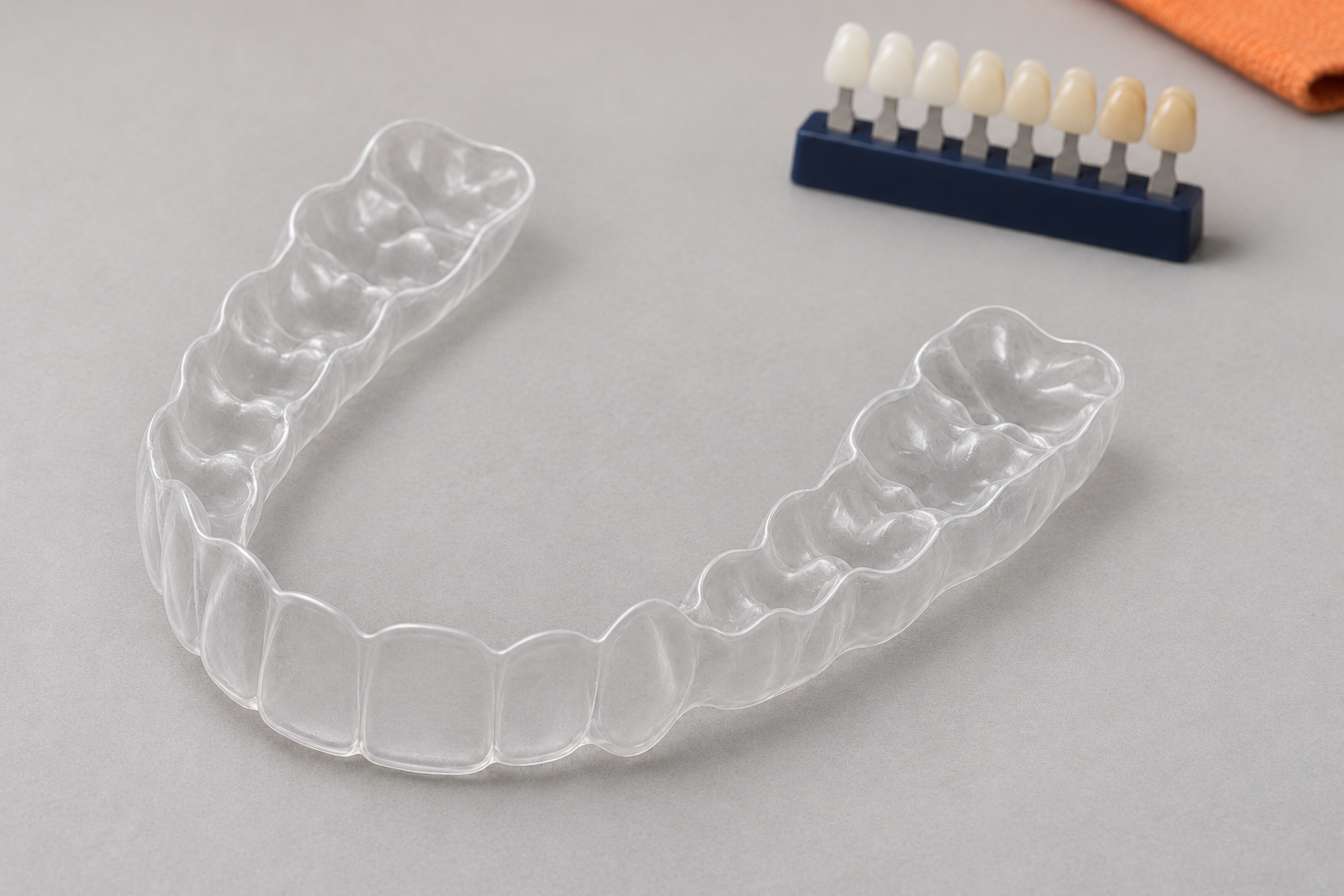
Your dentist will discuss a suitable method and realistic shade expectations. Options can include supervised home trays or in-clinic treatment. Follow the product-specific instructions; more gel or longer use does not mean a safer or better result.
Side effects and aftercare
Temporary sensitivity and gum irritation can occur, even with professional supervision. Tell your dentist about symptoms that trouble you, and follow their advice about pausing or adjusting treatment.
Keep up your normal oral hygiene and follow your individual aftercare instructions.
Results and alternatives
Whitening is not permanent. Staining habits and the type of discolouration affect the result and how long it lasts. A specific shade cannot be guaranteed.
For surface staining, professional cleaning may help. Your dentist can explain alternatives if whitening is unsuitable. Choosing no cosmetic treatment is also an option.
Fees and common questions
Ask the clinic about the recommended method, total fee and any future maintenance costs. Our subsidies guide explains available schemes; do not assume cosmetic treatment is covered.
Will whitening damage my teeth?
Your dentist should assess suitability and explain possible side effects. Whitening is not risk-free, and products should only be used as directed.
Sources and information
General information only. Your dentist will advise on your individual care. Sources checked 9 November 2026.